
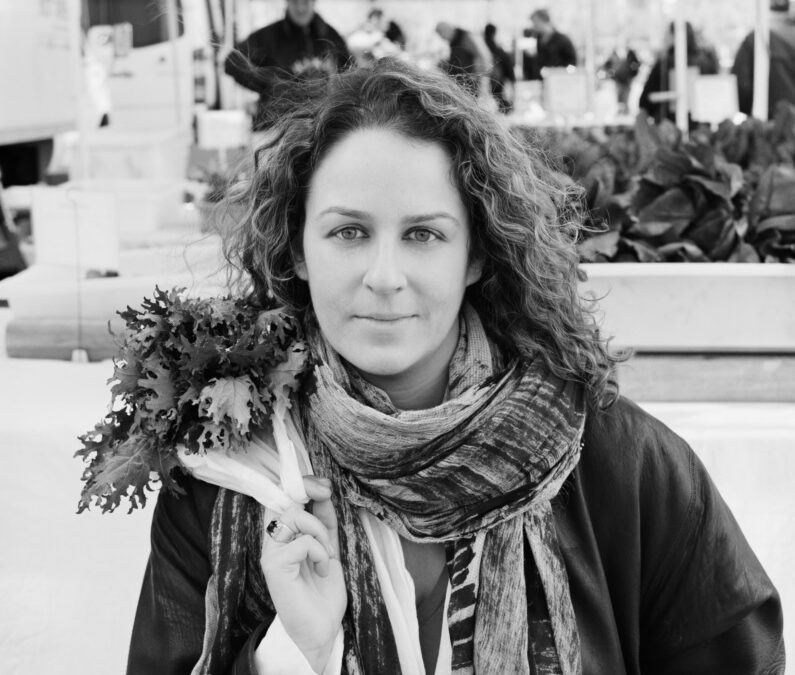
Johanna Kolodny
We met Johanna at a recent event and wanted to find out more about what it’s like to be a forager. Not the fictional superhero Forager published by DC Comics, who first appeared in August 1972, and was created by Jack Kirby. Rather, Johanna is a different kind of superhero. She works with farmers locally and from afar to find the best match for her clients. Read on to learn more…
What was your very first job involving food?
After college, I moved to NYC (a week before 9/11 happened) and took an internship with Saveur Magazine. The magazine focuses on culinary traditions, recipes, travel, and the stories of the people behind the food.
How did you become a forager?
I was always very interested in farming and saw the fractures in the system. I’m the type of person who likes to problem-solve and fix things, so I started building relationships with farmers and foragers. I began accumulating many relationships with farmers through my different jobs over time, so I started connecting chefs and restaurants with farmers and foragers. Having jobs in both the distribution sector and as a buyer for a restaurant really helped me see both sides of the equation.
Are there different kinds of foragers?
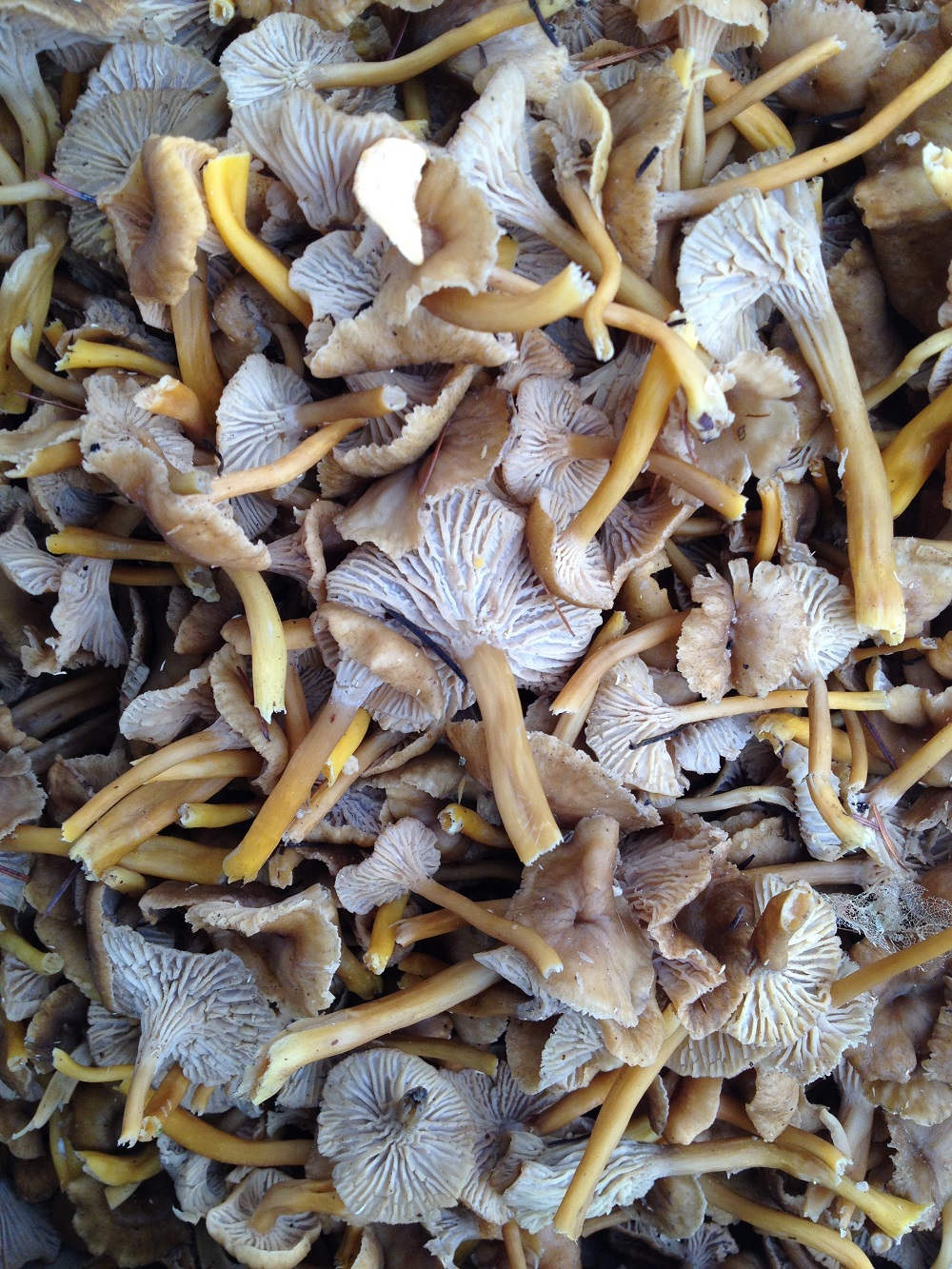
I know foragers in different parts of the United States who collect everything from mushrooms, leaves, blossoms, and sea beans. When it comes to wild edibles, chefs seem most interested in wild mushrooms. But there are so many flavorful and interesting wild edibles with which I wish more chefs would experiment.
 Who are some of your clients?
Mary Cleaver, who owns The Cleaver Co. and The Green Table in the Chelsea Market, is a client. She makes frozen entrees that she produces from her commercial kitchen. She wanted to wholesale them, so she hired me to find a co-packer and help bring her products to the wholesale market. I found someone with whom we’re in the early exploratory phase, so hopefully I can help her realize her dream.
Another client is a South American-based company named Interrupcion. The company works with South American farmers who are Certified Organic and Certified Fair Trade. They export produce, primarily fruit, to the United States and distribute it themselves, which is unusual. The company decided that for the other half of the year, they wanted an income supply and to provide their customers with a product. As a result, they are now starting to work with American farmers. I’m assigned the task of finding American farmers with whom they can develop relationships.
I helped a woman, who wants to remain nameless, create her supply chain for a primarily food takeaway shop. My initial help was for her business plan, so I created in-depth spreadsheets of potential suppliers. When she gets closer to launching, there’s the option for me to walk her and her staff through the process of setting up those relationships and creating internal ordering procedures and a support structure.
Togue Brawn of Maine Dayboat Scallops wants to educate the public about Maine-caught dayboat scallops and the difference between this product and the majority 99%. I’ve helped her create a CSF (community-supported fishery) and develop relationships with chefs in NYC.
Can you describe your current role as a Food Systems Consultant in New York City?
After years of developing relationships regionally and across the country, I ventured out on my own to start consulting a year and a few months ago. While I’m probably most well known for my sourcing and related skills, I believe I’m a bit ahead of the curve. I knew my sourcing services would not likely be my primary income, and I would have to think outside the box. Fortunately, I’ve had non-sourcing-specific projects come my way. I would very much like to work on more sourcing projects, but I think chefs are slow to see the value of such a service. I am sympathetic to the long hours and the tight margins with which chefs work, but I think there are additional psychological obstacles. I’m confident that spending money and time up front will pay off in the long run for chefs. I truly believe in the value I offer chefs, whether it’s getting them higher-quality ingredients or saving them money. Sustainability, whether it’s financial or environmental, at its core is about dealing with things now so they’re better down the road. I’m still hopeful that chefs will start to open their minds to this possibility.
Questions for Johanna? You can email her at: johannakolodny@gmail.com